
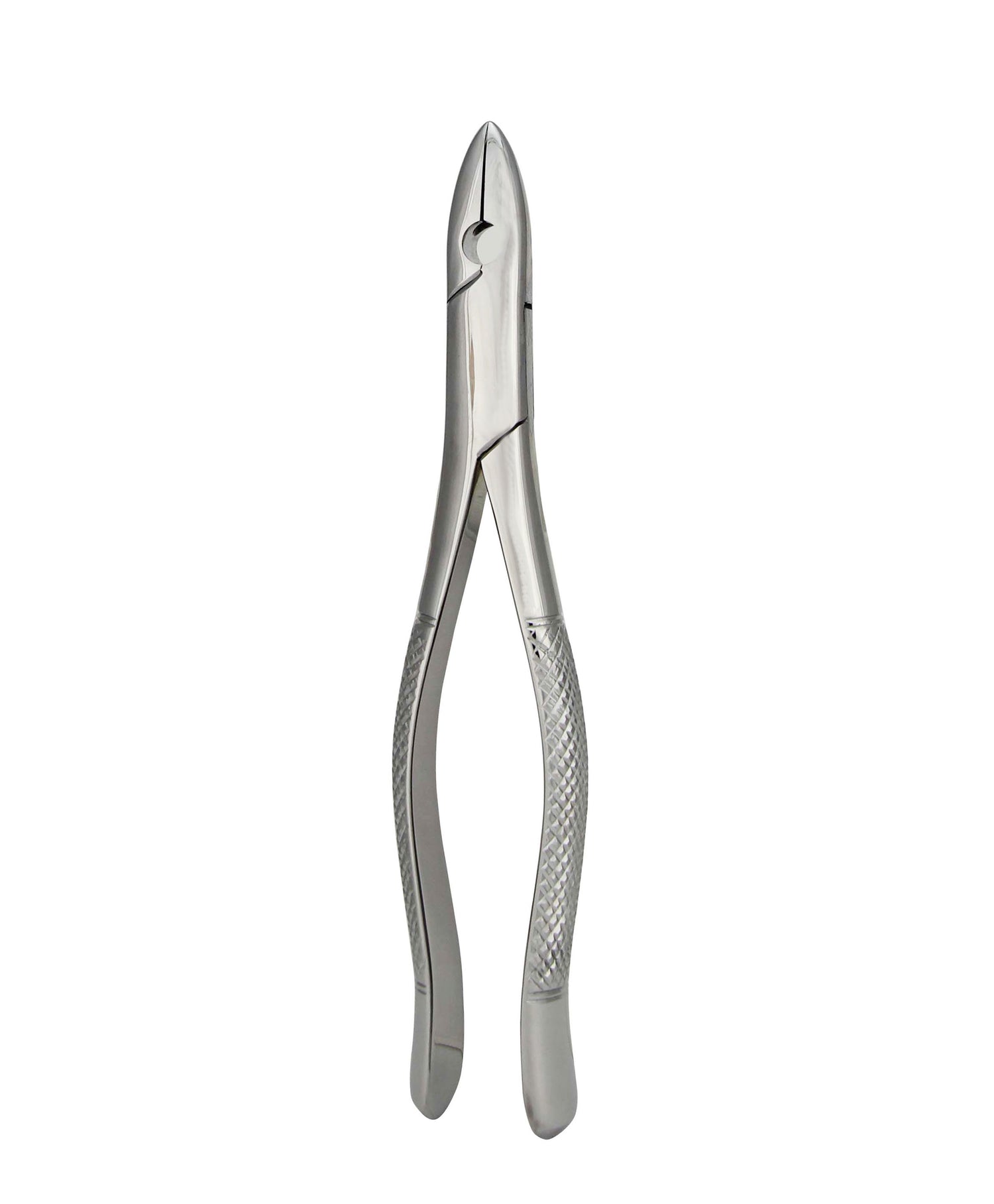
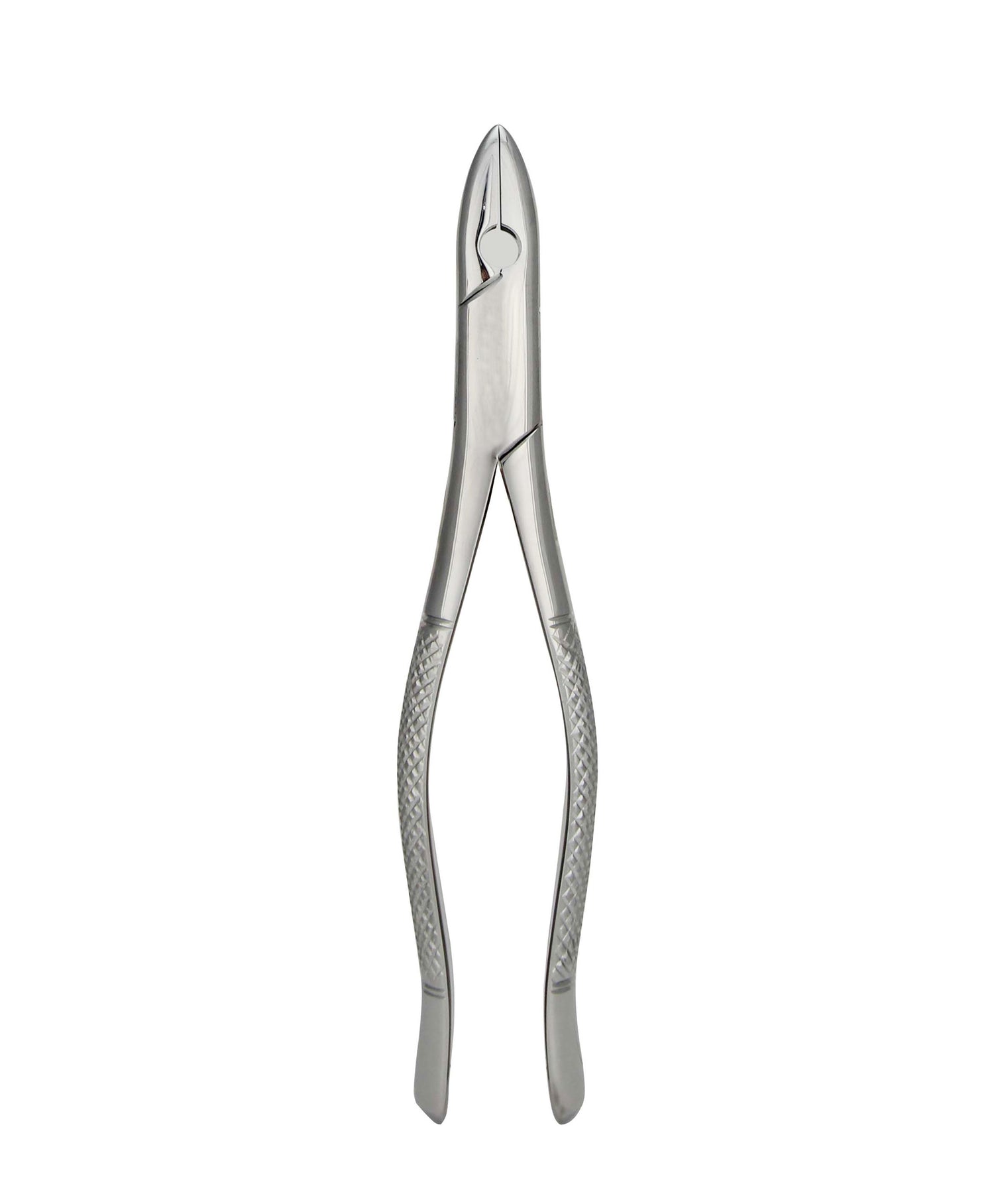
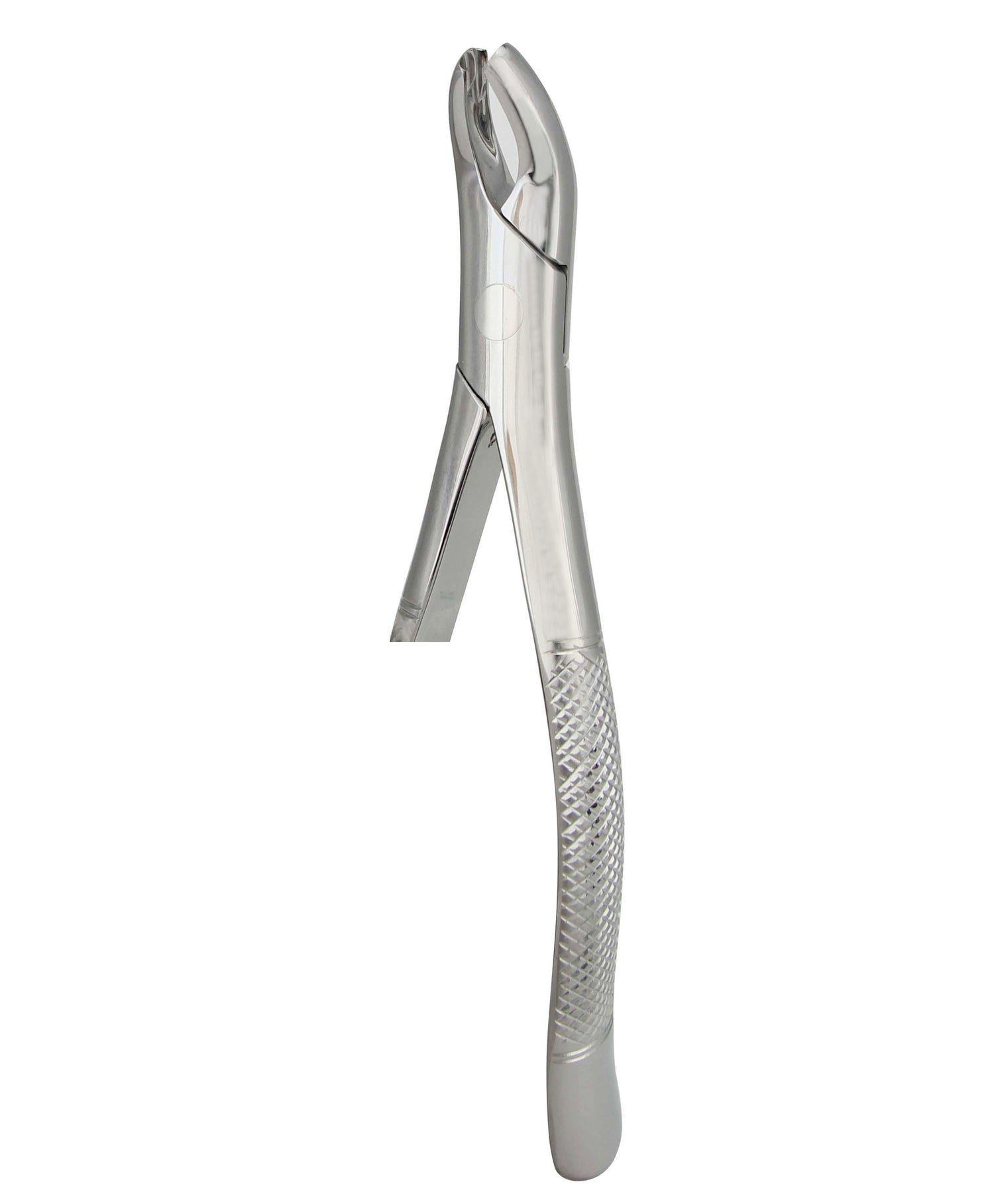
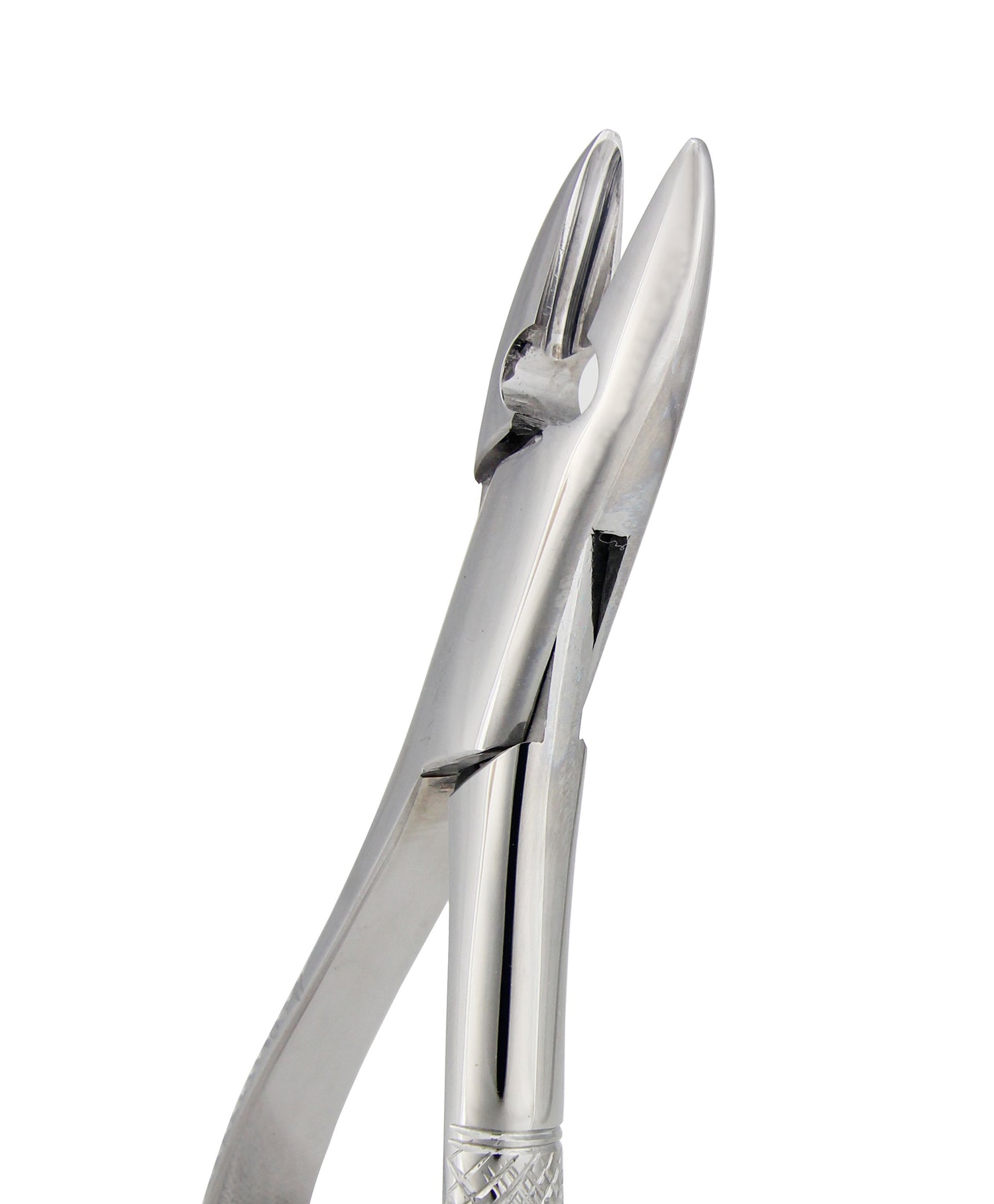
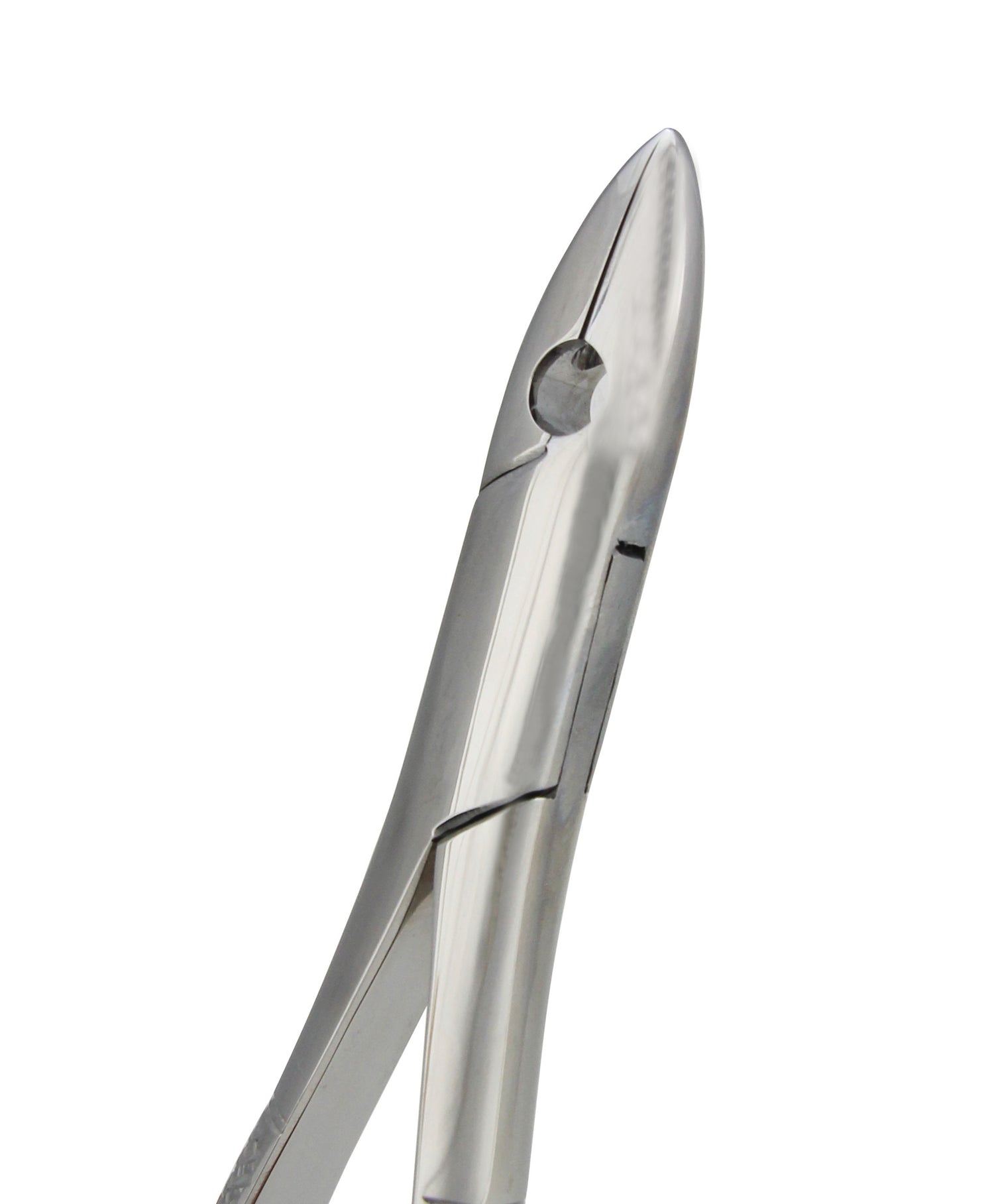
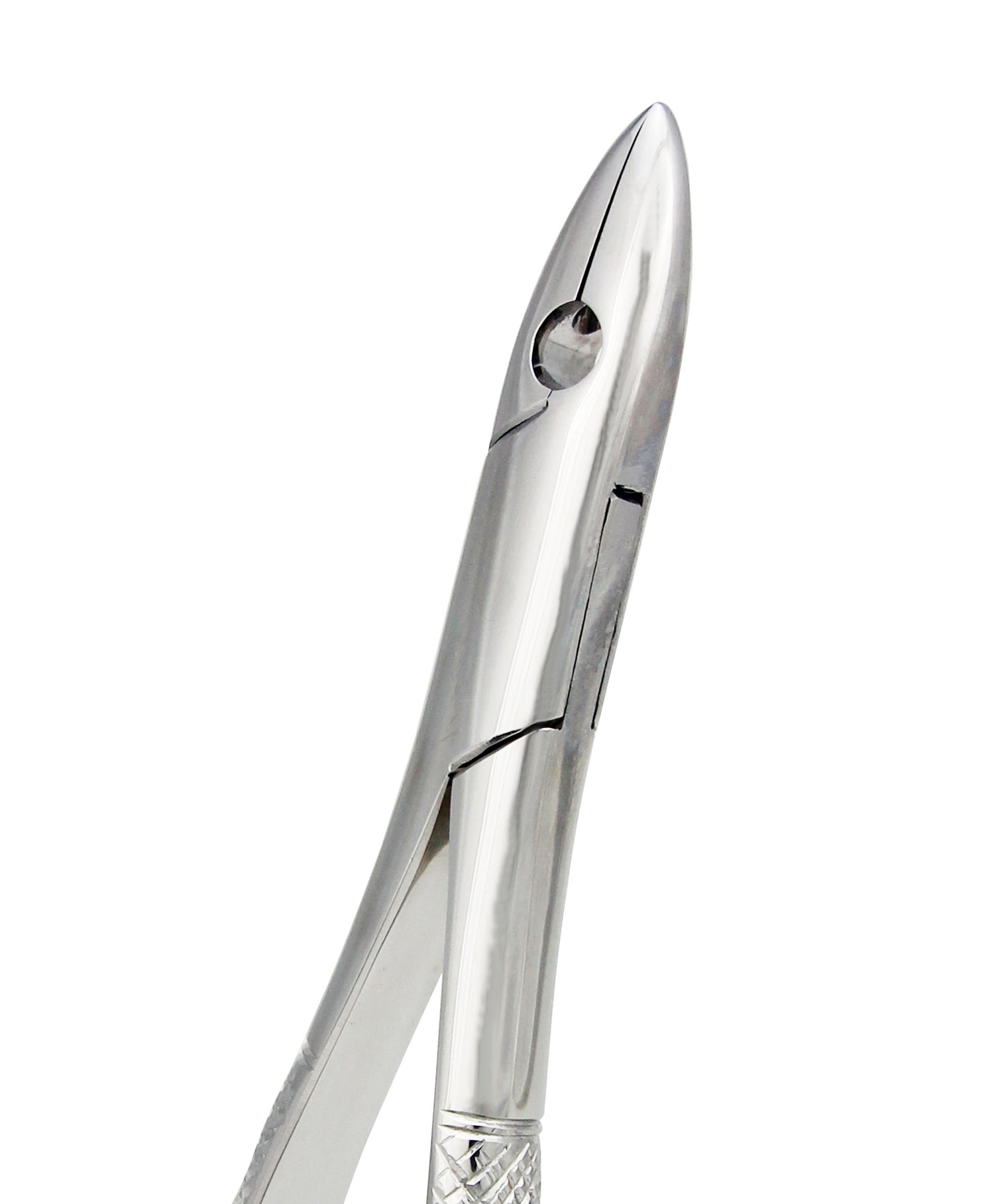
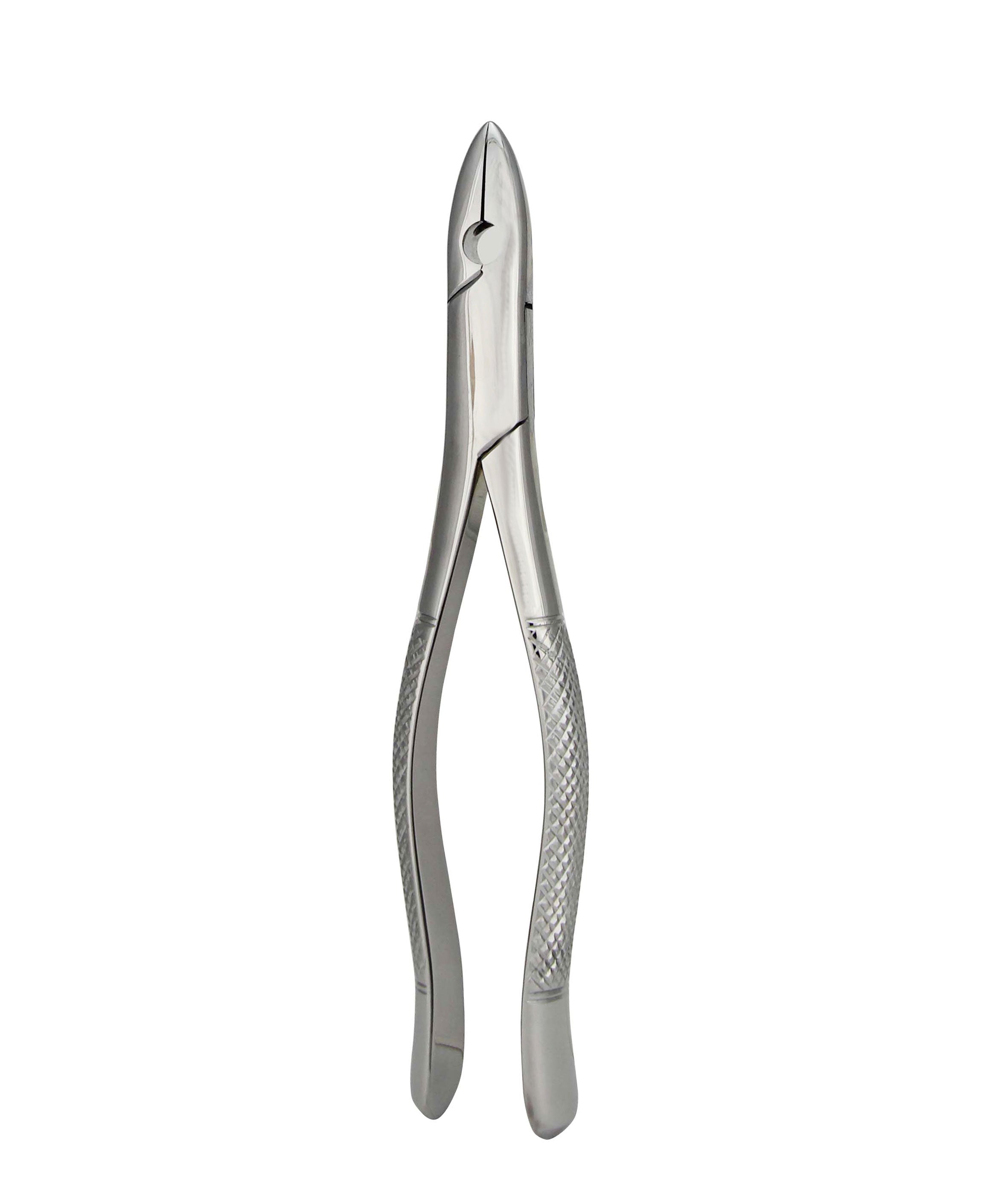
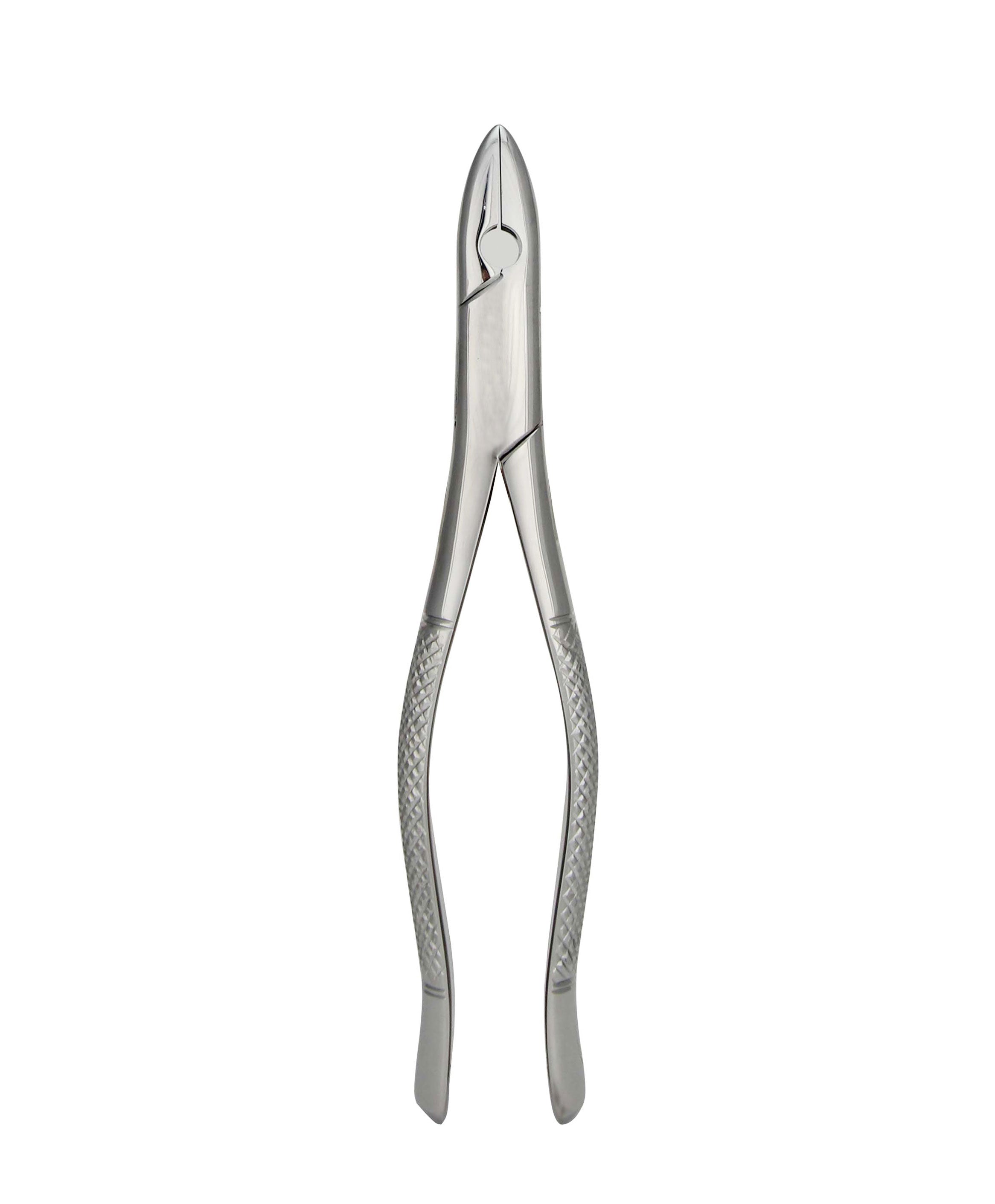
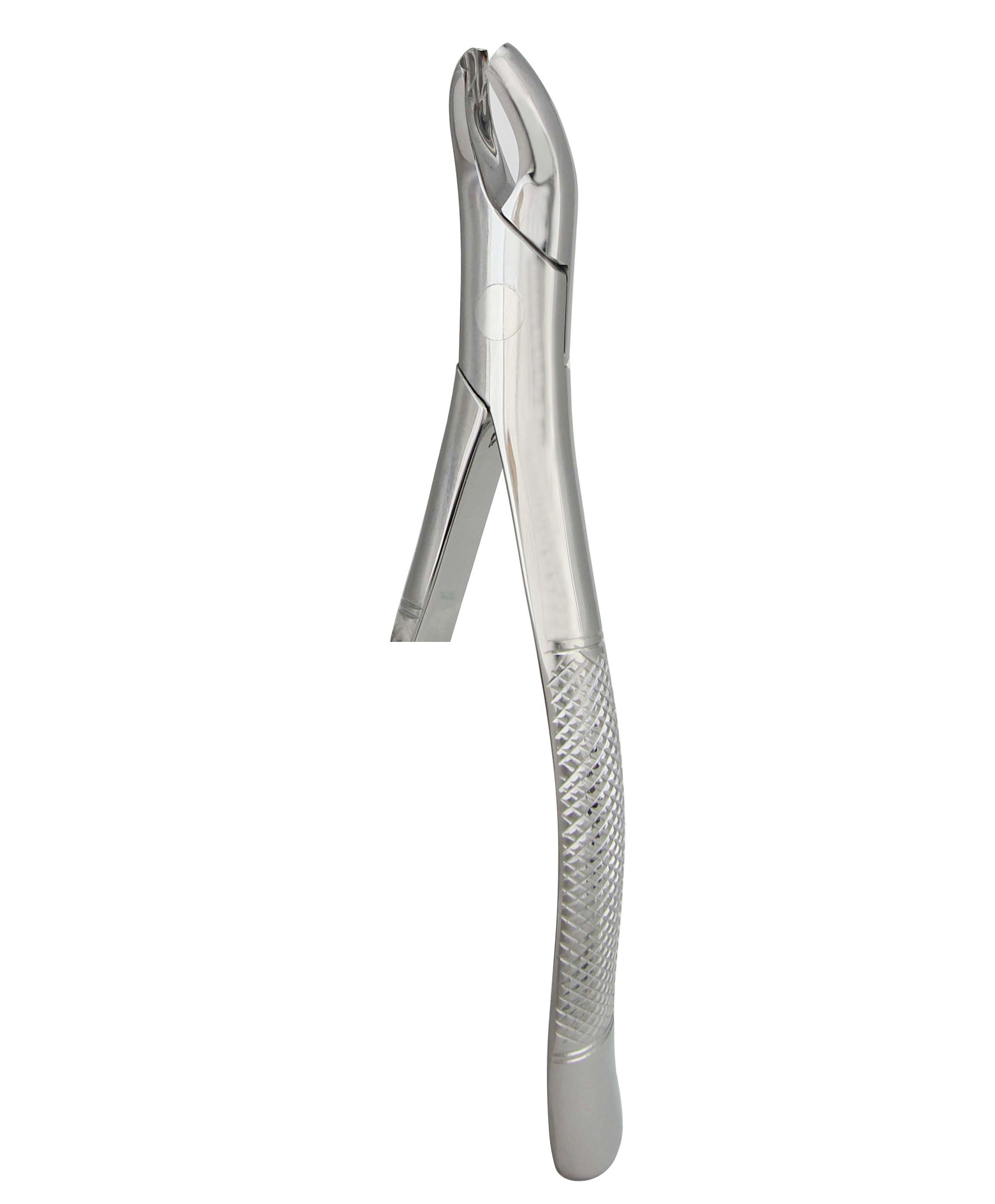
Upper Anterior Forceps 001
Art No: 36-001
Availability: In Stock
- Regular price
-
$35.00 - Regular price
-
- Sale price
-
$35.00
Couldn't load pickup availability
Description
Anterior Forceps — Precision Extraction Forceps for Incisors & Canines
Anterior forceps are dental extraction instruments designed to grip, luxate, and remove anterior teeth — the upper and lower incisors and canines — from their alveolar sockets. The instrument uses two opposing beaks that adapt to the single, conical roots of front teeth, a hinge joint that transfers hand pressure into controlled force, and serrated ergonomic handles that maintain a non-slip grip during extraction. Hunza Dental manufactures anterior forceps from German medical-grade stainless steel, drop-forged and passivated for corrosion resistance, autoclave sterilization, and a long clinical service life.
Product Overview
The Hunza Dental Anterior Forceps is a precision tooth-extraction forceps engineered for the atraumatic removal of anterior teeth in general dentistry and oral surgery. Its beaks meet edge-to-edge to seize the narrow root of an incisor or canine below the cementoenamel junction, while cross-serrations inside the beak resist slippage against enamel and cementum. The straight-beak pattern serves the maxillary (upper) anterior segment, and the right-angle pattern serves the mandibular (lower) anterior segment. Every unit is forged, hardened, ground, polished, and passivated in-house, then inspected against ISO 13485 quality procedures before dispatch.
What Are Anterior Forceps?
Anterior forceps are dental forceps used to extract the six front teeth of each arch — the central incisors, lateral incisors, and canines. They belong to the wider family of dental extraction instruments alongside molar forceps, premolar forceps, and root forceps. Anterior teeth have a single, rounded-to-conical root, so anterior forceps carry narrow, symmetrical beaks that meet in a single line rather than the split or bifurcated beaks used for multi-rooted molars. The maxillary version is a straight forceps whose beaks align with the handle axis; the mandibular version bends the beaks at roughly 90° to the handle so the operator can reach the lower incisors directly.
Purpose
The purpose of anterior forceps is to convert controlled hand pressure into a directed force that expands the alveolar socket, tears the periodontal ligament, and delivers the anterior tooth along the path of least resistance. The instrument grips the root, applies apical seating, then uses labial–palatal luxation and rotation to remove single-rooted front teeth with minimal bone and soft-tissue trauma.
Clinical Applications
- Extraction of non-restorable carious anterior teeth.
- Removal of periodontally compromised incisors and canines with mobility.
- Extraction of fractured or root-canal-failed front teeth.
- Serial or orthodontic extractions requiring anterior spacing.
- Removal of retained deciduous incisors and over-retained anterior roots.
- Pre-prosthetic extractions before anterior bridges, implants, or dentures.
Anterior Tooth Types Extracted With These Forceps
Anterior forceps address the four anterior tooth types across both arches. Each tooth type carries a distinct root form that governs the luxation and rotation applied through the forceps.
Upper Central Incisors
The maxillary central incisor has a single, conical, and nearly round root, which makes it the most rotation-friendly anterior tooth. Straight upper anterior forceps grip it firmly and combine mild rotation with labial–palatal movement for a clean delivery.
Upper Lateral Incisors
The maxillary lateral incisor has a slender single root that often curves distally at the apex. Because of this distal curvature, the operator favors labial–palatal luxation over aggressive rotation to avoid apical fracture, and the narrow beaks of anterior forceps seat precisely on its reduced root diameter.
Lower Incisors
The mandibular central and lateral incisors have thin roots flattened mesiodistally, so they resist rotation and are luxated primarily in the labial–lingual direction. Right-angle lower anterior forceps deliver force perpendicular to the flattened root to prevent shearing.
Canines
The canine (cuspid) has the longest and stoutest single root in the mouth, anchored in dense alveolar bone. Anterior forceps grip the canine root deeply and apply progressive luxation with controlled rotation, expanding the socket gradually to release the long root without fracture.
Anterior Tooth Anatomy & Extraction Biomechanics
Root Anatomy
Anterior teeth are single-rooted. Upper central incisors and canines carry conical roots suited to rotation; upper laterals curve distally; lower incisors are mesiodistally flattened and ovoid in cross-section. Root length increases from incisors to canines, with the canine root reaching the greatest apico-coronal length. Forceps beak geometry mirrors these root forms so the working end adapts along the long axis of the root.
Periodontal Ligament
The periodontal ligament (PDL) suspends each tooth in its socket via collagen fiber bundles inserted into cementum and alveolar bone. Successful extraction depends on progressively tearing these Sharpey's fibers. Sustained, deliberate luxation fatigues the PDL and expands the socket rather than snapping the root, which is why controlled force through anterior forceps outperforms abrupt pulling.
Extraction Biomechanics
Extraction biomechanics combine four forces transmitted through anterior forceps: apical pressure to seat the beaks and displace the center of rotation, labial–palatal luxation to expand the socket wall, rotation for conical single roots, and traction to deliver the tooth. The forceps act as a class-one lever with the hinge joint as the fulcrum, multiplying grip force at the beaks while the operator's wrist supplies rotation.
Design Features
Beak Design
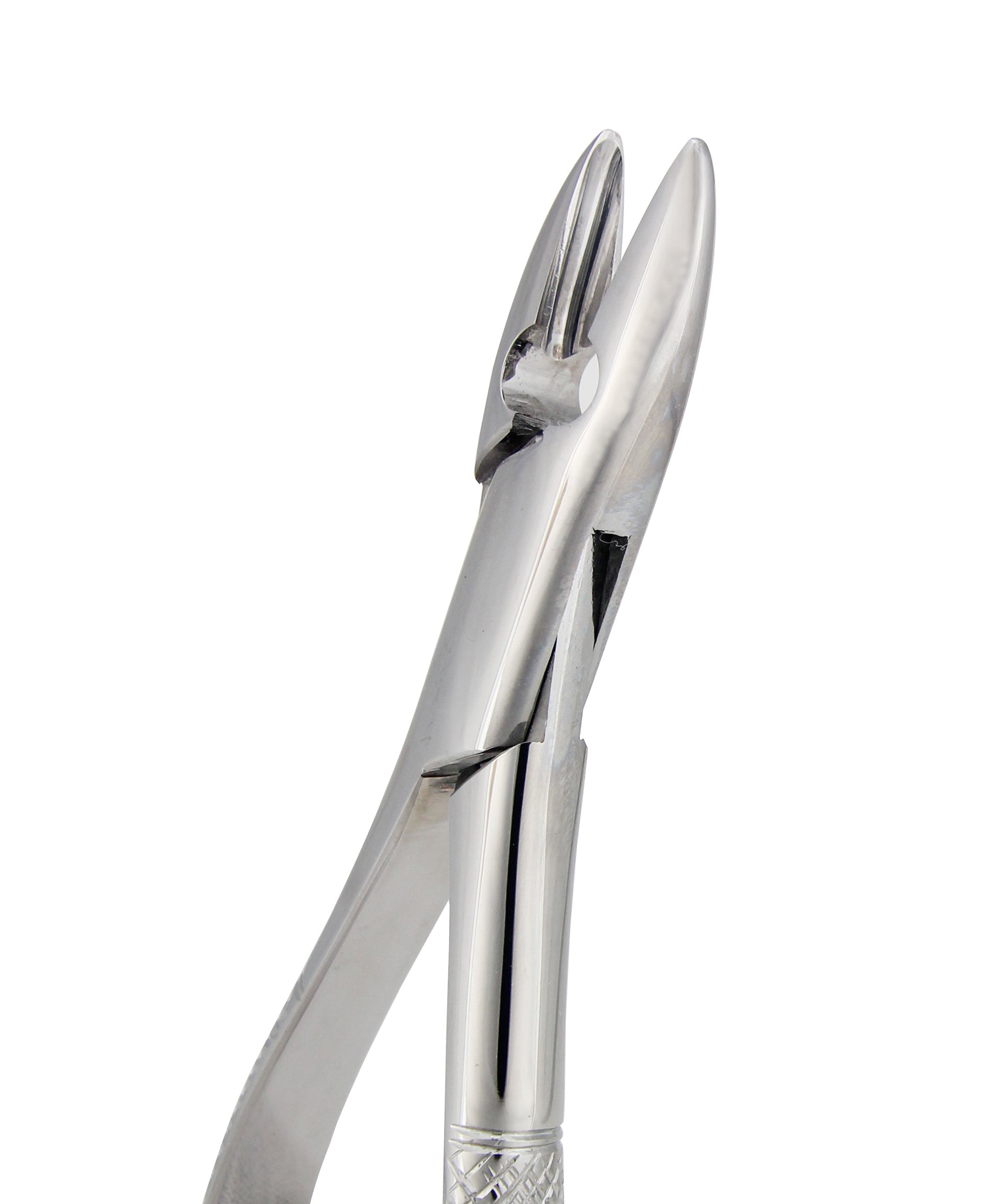
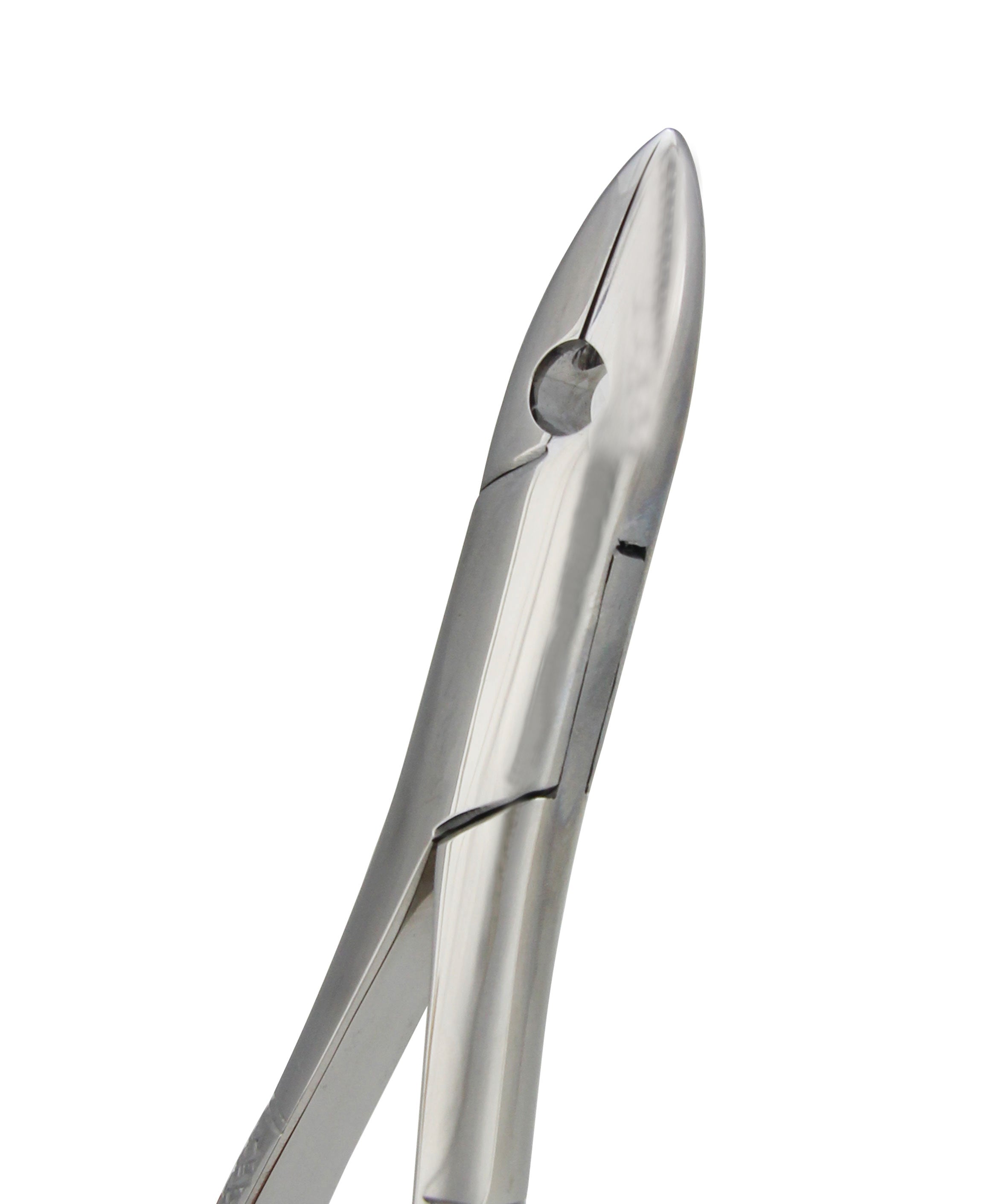
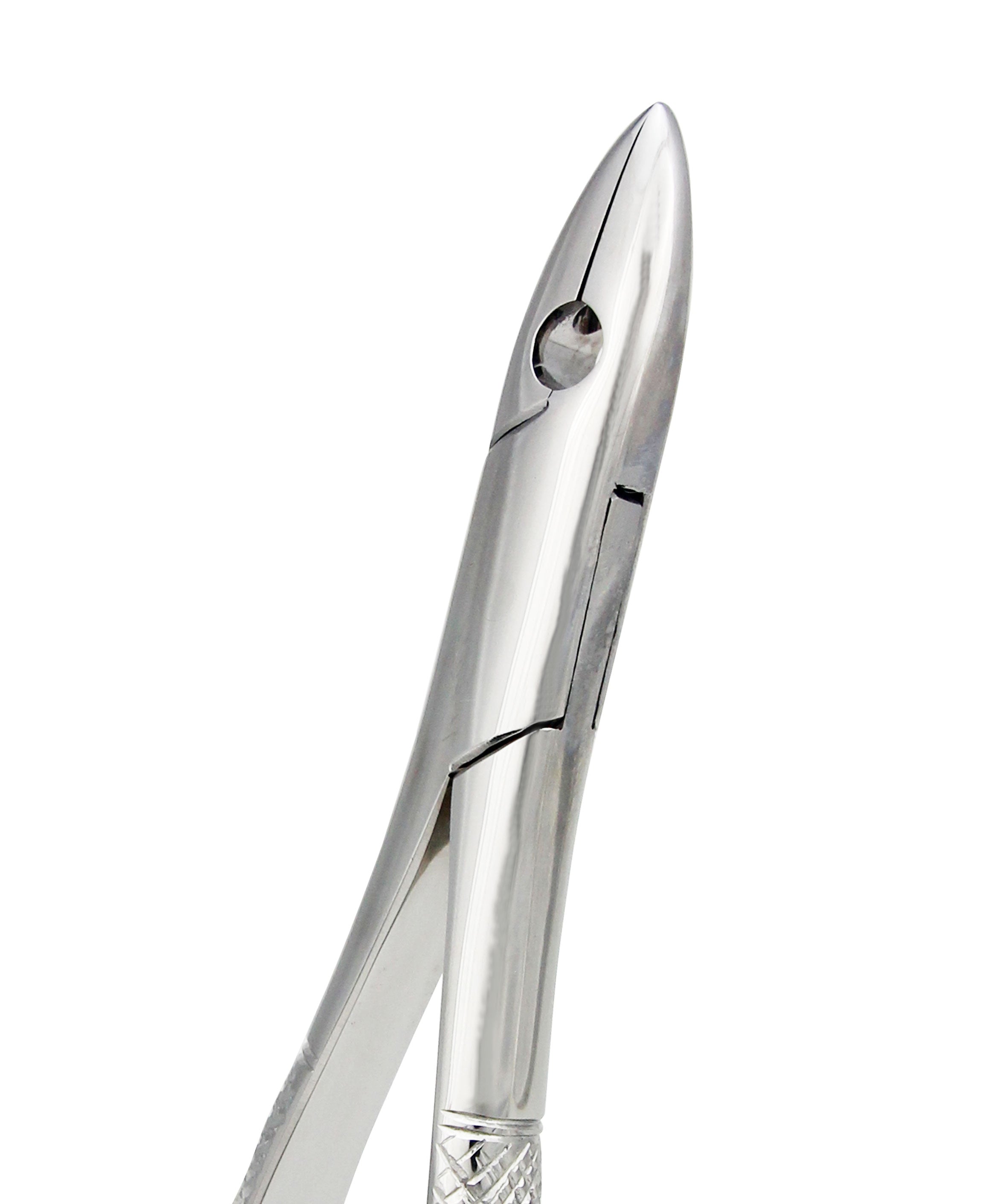
The beaks are narrow, symmetrical, and concave on their inner surface so they hug the convex root of an anterior tooth. Beak tips meet edge-to-edge to grip below the cementoenamel junction, and internal cross-serrations increase friction against cementum to eliminate slippage under load. Beak width is matched to the reduced diameter of incisor and canine roots.
Handle Design
The handles are serrated and contoured to fit the palm, delivering a secure non-slip grip that reduces hand fatigue during sustained luxation. The handle length provides mechanical advantage while keeping the operator's force controlled and finely modulated.
Joint Mechanism
A precision box joint (or lap joint on economy patterns) forms the hinge and fulcrum. The box joint locks the two blades in alignment, preventing lateral play so both beaks close on the same plane and share load evenly across the root surface.
Working Principle
Anterior forceps work as a first-class lever: the operator closes the handles, the hinge acts as the fulcrum, and grip force concentrates at the beaks on the root. Beak alignment, serration friction, and handle leverage convert modest hand pressure into the socket-expanding force needed to release single-rooted anterior teeth.
Available Patterns
Upper Anterior Forceps
Upper (maxillary) anterior forceps are straight forceps whose beaks lie in line with the handle. They are indicated for upper central incisors, lateral incisors, and canines, where a straight approach follows the long axis of the maxillary root.
Lower Anterior Forceps
Lower (mandibular) anterior forceps angle the beaks at approximately 90° to the handle so the working end reaches the lower incisors and canines while the operator's hand stays clear of the opposing arch.
Universal Anterior Forceps
Universal anterior forceps are designed to extract anterior teeth in either quadrant of the same arch, reducing the number of instruments needed on a tray while maintaining beak geometry appropriate to single-rooted teeth.
Left and Right Designs
Where root curvature or arch access demands it, side-specific left and right patterns angle the beaks to follow the tooth's inclination, improving seating on distally curved laterals and rotated anteriors.
Materials
German Stainless Steel
Hunza Dental anterior forceps are forged from German martensitic surgical stainless steel, prized for edge retention, hardness, and dimensional stability after heat treatment.
Medical Grade Stainless Steel
The alloy meets medical-grade surgical instrument standards (ISO 7153-1 material class), delivering the biocompatibility and mechanical strength required for repeated intraoral use.
Corrosion Resistance
A passivated chromium-oxide layer shields the surface from pitting and rust through hundreds of autoclave cycles, protecting beak serrations and the box joint from corrosion.
Surface Finish
Instruments are supplied in a satin (matte) finish that reduces glare under operatory lighting, or a mirror-polished finish on request. Both finishes are smooth, crevice-free, and easy to clean.
Manufacturing Process
Each anterior forceps passes through a controlled six-stage manufacturing sequence that fixes its strength, precision, and corrosion resistance.
- Drop Forging — the raw stainless bar is heated and drop-forged into the blade blank, aligning the grain flow for maximum strength at the joint and beaks.
- Heat Treatment — hardening and tempering set the correct hardness (typically 42–48 HRC range for forceps) so beaks resist wear without becoming brittle.
- Grinding — CNC and hand grinding shape the beaks, define the serrations, and true the box-joint mating faces.
- Polishing — surfaces are smoothed to a satin or mirror finish, removing micro-crevices that could harbor debris.
- Passivation — an acid bath restores the chromium-oxide passive layer for corrosion resistance.
- Quality Inspection — beak alignment, joint action, hardness, and finish are verified against ISO 13485 procedures before laser marking and packing.
Benefits
- Secure Grip — cross-serrated beaks lock onto cementum and eliminate slippage during luxation.
- Precision — narrow, aligned beaks seat accurately on the slim roots of incisors and canines.
- Reduced Trauma — controlled force preserves the labial plate and surrounding soft tissue for better socket healing.
- Better Access — straight and right-angle patterns match maxillary and mandibular approach angles.
- Controlled Extraction — the lever action and box joint deliver graduated, predictable force.
- Ergonomic Comfort — contoured serrated handles cut hand fatigue during longer procedures.
- Long Service Life — forged medical-grade steel and passivation withstand repeated autoclaving.
Clinical Uses
Anterior forceps are used wherever front teeth are extracted, across general and specialist practice.
- General Dentistry — routine removal of non-restorable, mobile, or fractured anterior teeth.
- Oral Surgery — surgical and complex anterior extractions, including pre-prosthetic and pre-implant sites.
- Dental Hospitals — high-volume extraction lists requiring durable, autoclavable instruments.
- Dental Clinics — everyday chairside extractions in private and group practice.
- Dental Universities — teaching sets for undergraduate and postgraduate extraction training.
Who Uses This Instrument?
- General Dentists — for daily anterior extractions in primary care dentistry.
- Oral Surgeons — for complex, surgical, and pre-prosthetic anterior tooth removal.
- Dental Students — to learn extraction biomechanics on incisors and canines.
- Specialists — periodontists, prosthodontists, and orthodontists managing anterior extractions before treatment.
How to Use Anterior Forceps — Step-by-Step Procedure
- Confirm the tooth and anesthesia. Verify the anterior tooth, achieve profound local anesthesia, and reflect the gingival attachment.
- Select the correct pattern. Choose straight forceps for upper anteriors or right-angle forceps for lower anteriors.
- Seat the beaks. Place the beaks along the root, apical to the cementoenamel junction, keeping them parallel to the long axis.
- Apply apical pressure. Seat firmly toward the apex to move the center of rotation apically and engage the root.
- Luxate. Apply slow, deliberate labial–palatal (or labial–lingual) pressure to expand the socket and fatigue the periodontal ligament.
- Rotate where indicated. Add gentle rotation for conical single roots (upper centrals, canines); avoid rotation on flattened lower incisors.
- Deliver. Once mobile, remove the tooth with light traction along the path of least resistance.
- Inspect. Confirm the intact root apex, curette the socket, and achieve hemostasis.
Safety Guidelines & Sterilization
Cleaning
Rinse instruments immediately after use to prevent debris and blood from drying in the serrations, then ultrasonically clean with an enzymatic detergent. Brush the box joint and beaks to clear organic matter.
Disinfection
Following cleaning, disinfect with an approved instrument-grade solution before packaging. Use only pH-neutral or manufacturer-approved agents to protect the passive layer.
Sterilization
Sterilize by moist-heat steam autoclave. Open the box joint slightly and package in sterilization pouches so steam contacts every surface.
Autoclave Compatibility
Hunza Dental anterior forceps are fully autoclavable at standard steam parameters (typically 134 °C for 3–4 minutes, or 121 °C for 15–20 minutes) per your facility's validated cycle. Passivation preserves corrosion resistance across repeated cycles.
Storage
Store dry in a cassette or tray with the joint lightly lubricated, away from dissimilar metals to prevent galvanic corrosion.
Maintenance
Lubricate the box joint periodically with instrument milk, and keep serrations free of debris to maintain grip.
Inspection
Before each use, inspect beak alignment, tip contact, joint smoothness, and serration sharpness. Verify the beaks meet cleanly with no lateral play.
Replacement
Retire any forceps with worn serrations, misaligned beaks, a loose joint, corrosion pits, or reduced grip, as these compromise safe extraction.
Common Mistakes to Avoid
- Gripping enamel or crown instead of seating apically on the root, causing crown fracture.
- Rotating flattened lower incisor roots, which shears the root apex.
- Applying rapid, forceful pulling instead of slow, sustained luxation.
- Using a molar or premolar pattern on an anterior tooth, mismatching beak geometry.
- Neglecting apical seating, leaving the center of rotation too coronal.
- Ignoring distal root curvature on upper lateral incisors during rotation.
How to Choose the Right Anterior Forceps — Buying Guide
Select anterior forceps by arch, root form, material grade, and finish. Match the pattern to the segment you treat most, and prioritize forged medical-grade steel with verified corrosion resistance for longevity.
- Arch and pattern — straight for maxillary anteriors, right-angle for mandibular anteriors, or universal for mixed use.
- Beak width — narrow beaks for slim incisor roots; slightly broader for stout canine roots.
- Steel grade — German medical-grade martensitic stainless for hardness and edge retention.
- Joint type — box joint for precision alignment and load sharing.
- Finish — satin to cut glare, or mirror where preferred.
- Certification — ISO 13485 manufacturing, CE marking, and FDA registration for regulated markets.
Comparison Tables
Upper vs Lower Anterior Forceps
| Attribute | Upper Anterior Forceps | Lower Anterior Forceps |
|---|---|---|
| Beak orientation | In line with handle (straight) | ~90° to handle (right-angle) |
| Target teeth | Upper incisors & canines | Lower incisors & canines |
| Primary motion | Labial–palatal + rotation | Labial–lingual (limited rotation) |
| Access approach | Direct from front | Down onto lower arch |
Anterior vs Universal Forceps
| Attribute | Anterior Forceps | Universal Forceps |
|---|---|---|
| Scope | Incisors & canines only | Multiple tooth groups in an arch |
| Beak shape | Narrow, single-line | Broader, adaptable |
| Best for | Precise single-root grip | Fewer instruments on tray |
Anterior vs Root Forceps
| Attribute | Anterior Forceps | Root Forceps |
|---|---|---|
| Purpose | Whole anterior teeth | Retained roots & fragments |
| Beak tips | Wider, grip full root | Fine, pointed for fragments |
| Typical use | Routine extraction | Broken-down or fractured roots |
Anterior vs Pediatric Forceps
| Attribute | Anterior (Adult) | Pediatric Forceps |
|---|---|---|
| Size | Full-size beaks & handles | Smaller, scaled-down |
| Target | Permanent anterior teeth | Deciduous (primary) teeth |
| Grip force | Higher | Lower, gentler on thin roots |
Technical Specifications
| Instrument | Anterior (Incisor & Canine) Extraction Forceps |
| Material | German medical-grade martensitic stainless steel |
| Patterns | Upper (straight), Lower (right-angle), Universal, Left/Right |
| Beak | Narrow, cross-serrated, edge-to-edge contact |
| Joint | Box joint (lap joint on economy line) |
| Handle | Serrated, ergonomic, non-slip |
| Finish | Satin (matte) standard; mirror-polish optional |
| Approx. length | ~15–16 cm (pattern dependent) |
| Hardness | ~42–48 HRC (heat-treated) |
| Sterilization | Autoclavable, steam (up to 134 °C) |
| Reusability | Reusable, corrosion-resistant, passivated |
| Standards | ISO 13485, CE, FDA-registered facility |
| Branding | OEM, private label, laser or acid marking |
Features at a Glance
| Feature | Description |
|---|---|
| Cross-serrated beaks | Non-slip grip on cementum and root surface |
| Precision box joint | Zero lateral play, even load distribution |
| Pattern-matched geometry | Straight for upper, right-angle for lower anteriors |
| Forged construction | Aligned grain flow for joint and beak strength |
| Passivated surface | Corrosion resistance across autoclave cycles |
| Ergonomic handles | Reduced hand fatigue during luxation |
Frequently Asked Questions
What are anterior forceps used for?
Anterior forceps are used to extract the front teeth — the upper and lower incisors and canines — by gripping the single root and luxating the tooth from its socket.
Which teeth are anterior teeth?
Anterior teeth are the six front teeth in each arch: two central incisors, two lateral incisors, and two canines.
What is the difference between upper and lower anterior forceps?
Upper anterior forceps are straight, with beaks in line with the handle for maxillary teeth. Lower anterior forceps angle the beaks at about 90° to reach mandibular teeth.
Can anterior forceps extract canines?
Yes. Anterior forceps grip the long single root of the canine and remove it with progressive luxation and controlled rotation.
Should you rotate anterior forceps during extraction?
Rotation is appropriate for conical single roots such as upper central incisors and canines, but should be avoided on mesiodistally flattened lower incisor roots.
What material are Hunza Dental anterior forceps made from?
They are forged from German medical-grade martensitic stainless steel, then heat-treated and passivated for hardness and corrosion resistance.
Are anterior forceps autoclavable?
Yes. They are fully autoclavable by steam sterilization, typically at 134 °C, and are passivated to resist corrosion through repeated cycles.
How do I clean anterior forceps?
Rinse immediately after use, ultrasonically clean with enzymatic detergent, brush the joint and serrations, disinfect, then autoclave in a sterilization pouch.
What is the beak design of anterior forceps?
The beaks are narrow, symmetrical, and cross-serrated, meeting edge-to-edge to grip the slim root of an incisor or canine below the cementoenamel junction.
What is the difference between anterior and universal forceps?
Anterior forceps are dedicated to incisors and canines with narrow single-line beaks, while universal forceps have broader beaks that extract several tooth groups in an arch.
What is the difference between anterior forceps and root forceps?
Anterior forceps remove whole front teeth, while root forceps have finer, pointed beaks for retained roots and fractured fragments.
Do you offer left and right anterior forceps?
Yes. Side-specific patterns angle the beaks to follow root curvature and arch inclination, improving seating on curved laterals and rotated anteriors.
What size are anterior forceps?
Anterior forceps are typically around 15–16 cm long, varying by pattern and manufacturer specification.
Why do anterior forceps have serrations?
Cross-serrations increase friction between the beak and root cementum, preventing slippage while force is applied during luxation.
What is a box joint on forceps?
A box joint is a precision hinge in which one blade passes through a slot in the other, locking alignment so the beaks close on the same plane with no lateral play.
How long do anterior forceps last?
With proper cleaning, lubrication, and inspection, forged medical-grade forceps last for years of repeated autoclaving; retire them when serrations wear or beaks misalign.
Can dental students use these forceps?
Yes. Anterior forceps are standard teaching instruments for learning extraction biomechanics on incisors and canines.
Are Hunza Dental anterior forceps CE and FDA compliant?
They are manufactured under ISO 13485 procedures, CE-marked for European markets, and produced in an FDA-registered facility for regulated markets.
Do you offer OEM and private-label anterior forceps?
Yes. Hunza Dental provides OEM manufacturing, private-label branding, custom laser marking, bulk orders, and wholesale supply.
What is the minimum order for wholesale anterior forceps?
Wholesale and bulk quantities are flexible; contact Hunza Dental with your target volume and branding for a tailored quotation.
Can anterior forceps be used on primary (baby) teeth?
Permanent anterior forceps are sized for adult teeth; smaller pediatric patterns are recommended for deciduous incisors and canines.
How do anterior forceps reduce trauma during extraction?
Precise beak seating, controlled lever force, and slow luxation expand the socket and tear the periodontal ligament gradually, preserving the labial plate and soft tissue.
Why Choose Hunza Dental?
Hunza Dental is a dental instrument manufacturer that forges, finishes, and inspects anterior forceps in-house, giving clinics, distributors, and brands direct control over quality, branding, and supply.
Manufacturing Standards
Every instrument is produced under ISO 13485 quality-management procedures, with documented forging, heat-treatment, and passivation controls.
OEM Manufacturing
Hunza Dental manufactures anterior forceps to your specifications, patterns, and tolerances for OEM partners worldwide.
Private Label Services
We apply your brand identity through laser or acid marking, custom packaging, and documentation.
Custom Branding
Logos, catalog numbers, and finishes are customized to match your product line.
Bulk Orders
Scalable production supports large clinical, hospital, and distributor orders with consistent quality.
Wholesale Supply
Competitive wholesale pricing and reliable lead times serve dental distributors and group practices.
Global Shipping
Hunza Dental ships to the United States, Canada, the United Kingdom, Australia, Europe, and the Middle East.
Quality Assurance
Each forceps is inspected for beak alignment, joint action, hardness, and finish before dispatch.
Certifications
Manufacturing aligns with ISO 13485, CE marking, and FDA facility registration for regulated markets.
Warranty
Instruments are warranted against manufacturing and material defects under normal clinical use.
Order Anterior Forceps from Hunza Dental
Equip your practice with precision-forged anterior extraction forceps built for secure grip, controlled force, and a long service life. Request a wholesale quote, order OEM or private-label instruments, or add these forceps to your extraction tray today.