


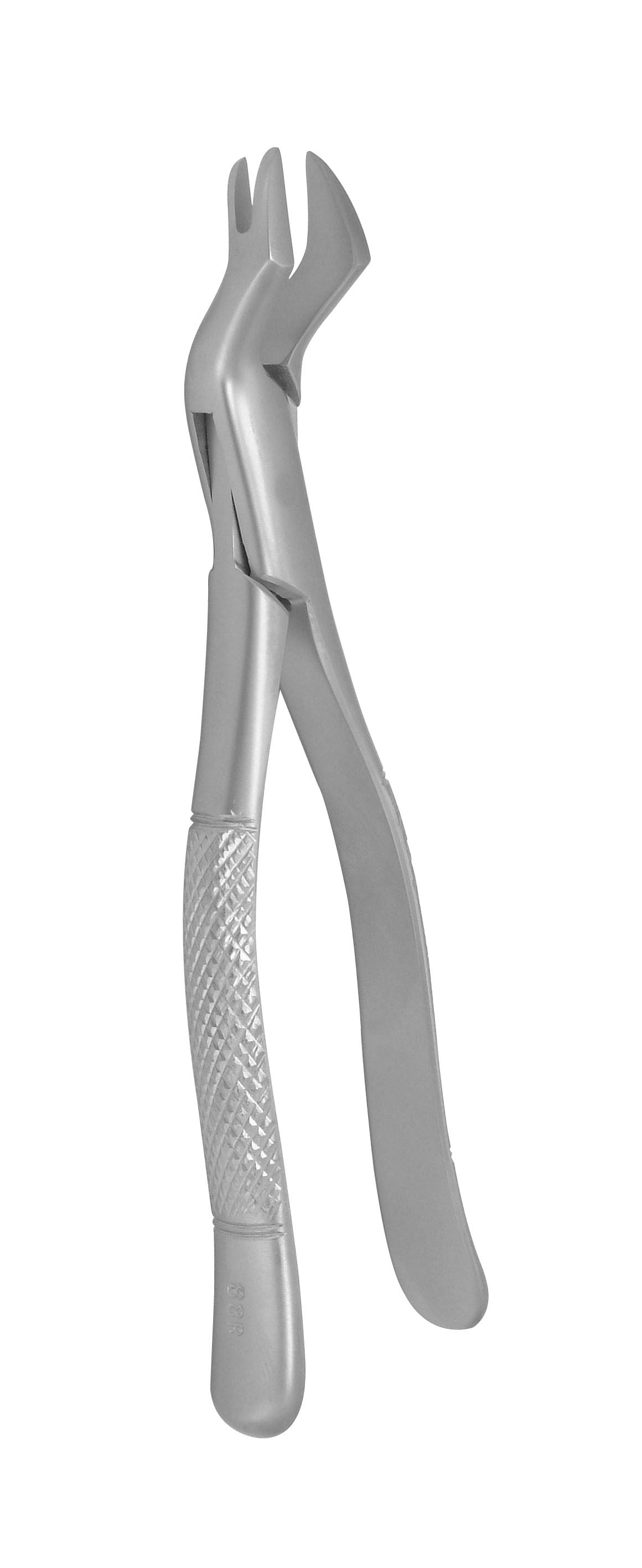
Upper Molar Right & Left Forceps 88L & 88R
Art No: 36-88L-88R
Availability: In Stock
- Regular price
-
$80.00 - Regular price
-
- Sale price
-
$80.00
Couldn't load pickup availability
Description
Upper (Maxillary) Molar Forceps Side-Specific Extraction Forceps for Buccal & Palatal Root Engagement
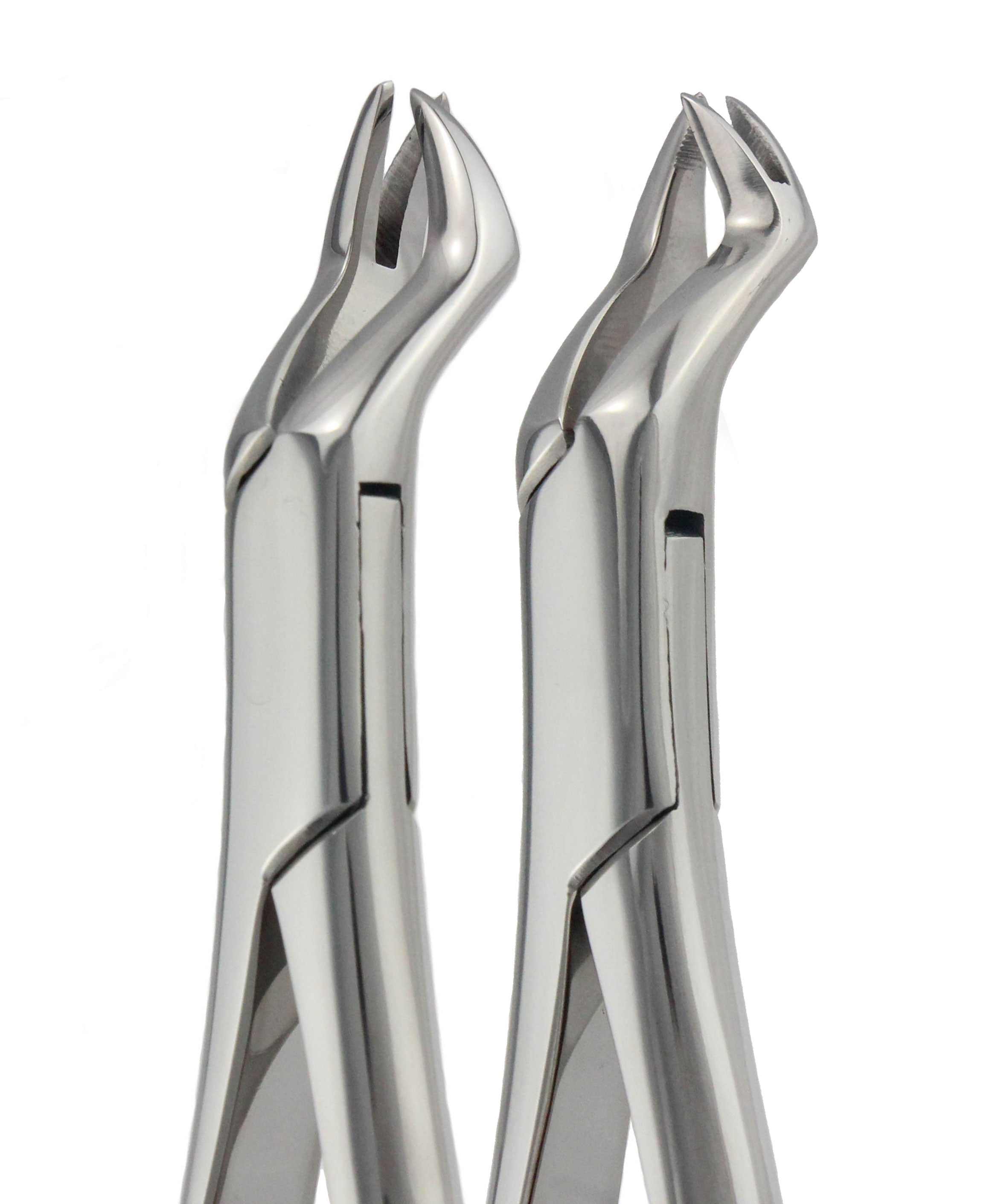
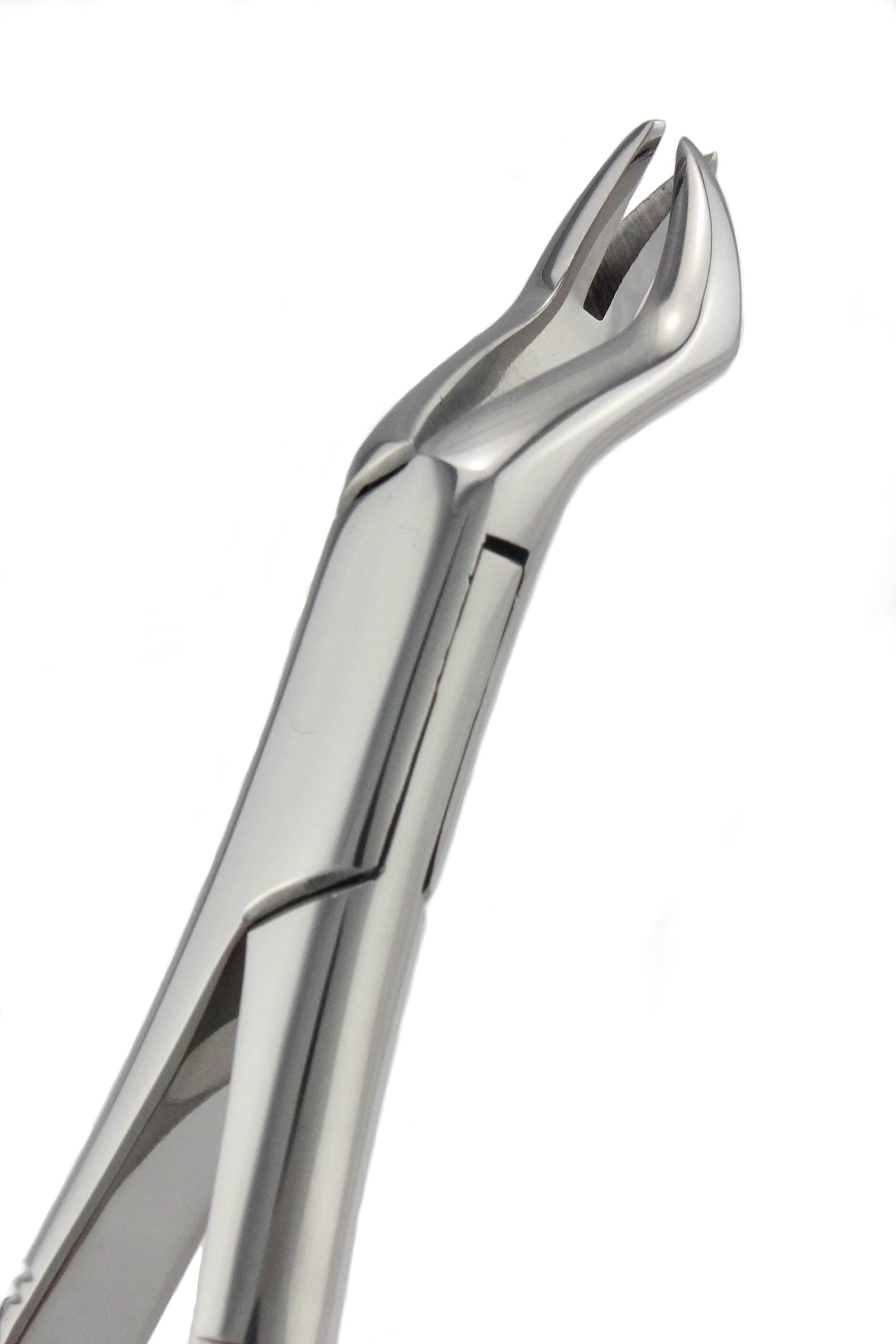
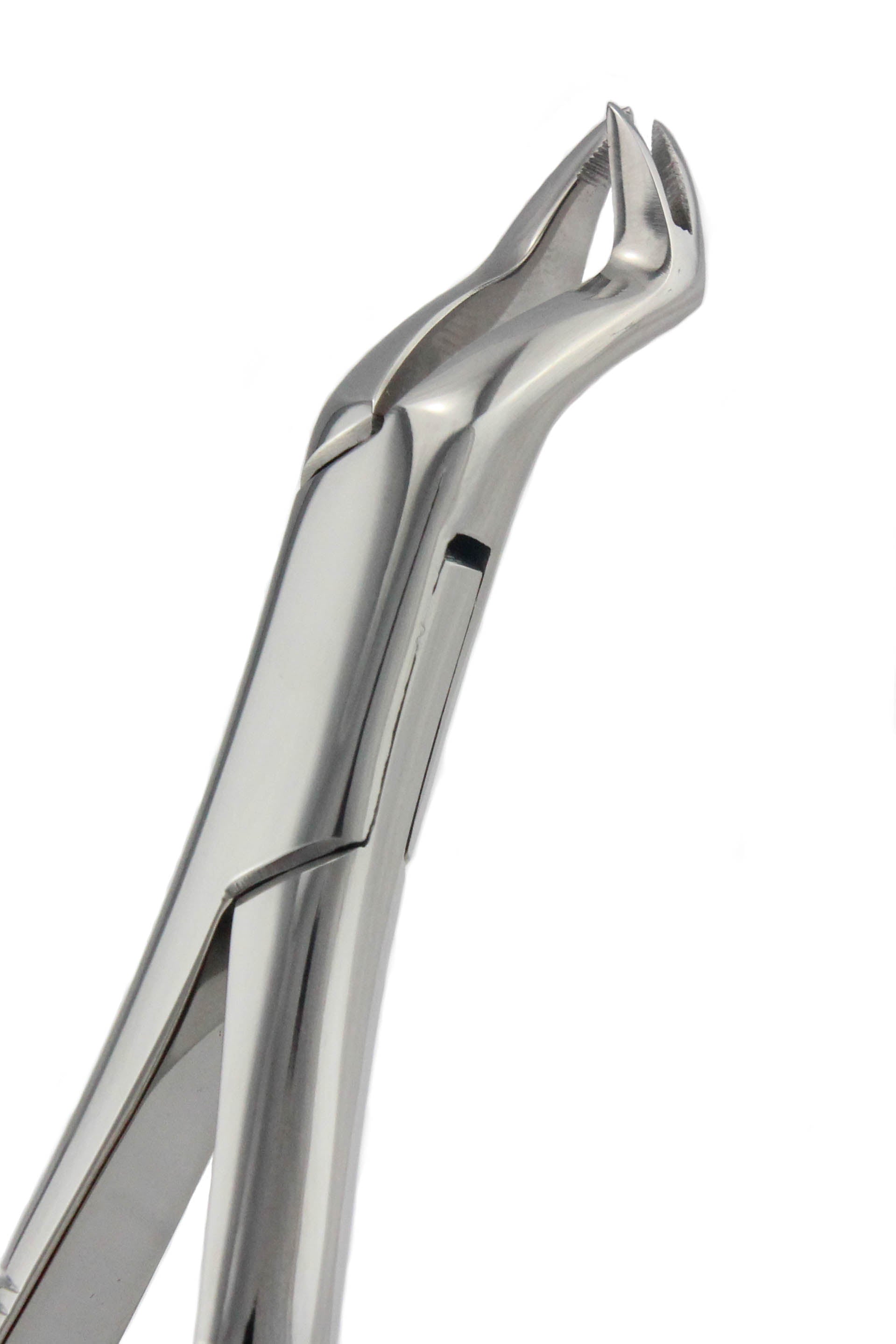
Upper molar forceps are side-specific dental extraction instruments designed to grip and remove maxillary first and second molars by engaging their three-root anatomy the two buccal roots and the single palatal root. Each instrument carries a pointed buccal beak that seats into the buccal furcation between the mesiobuccal and distobuccal roots, and an opposing smooth, concave palatal beak that adapts to the rounded palatal root. This asymmetry is why maxillary molar forceps are supplied as matched left and right pairs, unlike a universal forceps that fits either quadrant. Hunza Dental forges each pair from German martensitic stainless steel, hardens the beaks to hold their working edge, and finishes the handle with cross serration for a non-slip grip during controlled luxation and elevation.
Product Overview
The Hunza Dental Upper Molar Forceps is a precision oral surgery instrument built for atraumatic tooth removal in the maxillary posterior region. It is manufactured to ISO 13485 quality standards, carries CE certification for the European market, and is fully autoclave-safe for repeated steam sterilization. The instrument is available in English, American, and European anatomical patterns, in both right (R) and left (L) configurations, so a clinician can match the beak geometry to the exact root morphology of the tooth being extracted.
- Instrument type: Dental extraction forceps (maxillary molar)
- Application region: Upper first molar, upper second molar
- Root engagement: Buccal furcation (pointed beak) + palatal root (concave beak)
- Configuration: Side-specific — Right (R) and Left (L)
- Material: German surgical stainless steel; optional tungsten carbide beak inserts
- Sterilization: Autoclavable up to 134 °C
- Standards: ISO 13485, CE marked
What Are Upper (Maxillary) Molar Forceps?
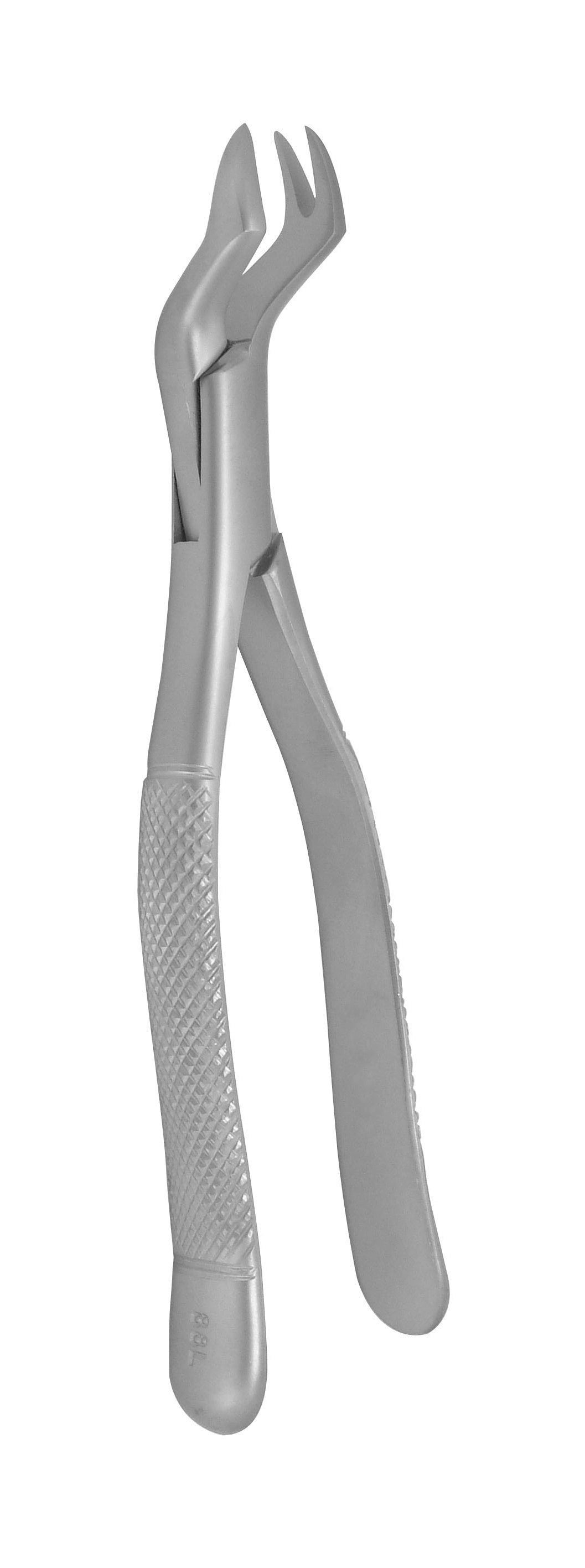
Upper molar forceps are hinged, plier-like dental instruments that transmit extraction force from the operator's hand to the crown and roots of a maxillary molar. The instrument consists of three functional parts: the beaks that grip the tooth, the joint (box or lap hinge) that acts as the fulcrum, and the handles that the clinician squeezes. Upper molar forceps differ from every other extraction forceps in one defining attribute — one beak is pointed to enter the buccal bifurcation, while the other is rounded for the palatal root, making the design inherently right- or left-handed relative to the arch.
Purpose
The purpose of upper molar forceps is to seat firmly on the tooth's roots below the crown, expand the alveolar socket through controlled buccal and palatal movements (luxation), and deliver the tooth along its path of withdrawal with minimal trauma to the surrounding periodontal ligament and alveolar bone.
Clinical Applications
- Routine extraction of erupted maxillary first and second molars
- Removal of carious, non-restorable, or fractured upper molars
- Extraction supporting orthodontic space management
- Periodontally compromised upper molar removal
- Pre-prosthetic and pre-implant surgical extractions
Design Features
Every design element of the Hunza Dental upper molar forceps serves the goal of precise root engagement and reduced extraction trauma.
Working Mechanism
The forceps operate as a first-class lever: the joint is the fulcrum, the handles are the effort arm, and the beaks are the load arm. Squeezing the handles multiplies grip force at the beaks, while wrist rotation converts that grip into the buccal, palatal, and rotational luxation movements that widen the socket and sever the periodontal ligament fibers.
Beak Design
The beaks are the defining feature of maxillary molar forceps. The buccal beak ends in a sharp central point (a "beak tip" or projection) that wedges into the furcation between the mesiobuccal and distobuccal roots. The palatal beak is broader and concave, cupping the single palatal root. This pointed-versus-concave asymmetry is why the instrument is supplied as a matched right/left pair the pointed beak must always face the buccal (cheek) side of the specific quadrant.
Handle Design
The handles feature deep cross serrations that lock into the operator's palm and fingers, delivering a non-slip grip even when the field is wet with saliva or blood. The ergonomic curvature reduces hand fatigue during multiple extractions and improves force control, which lowers the risk of sudden slippage and soft-tissue injury.
Joint Construction
Hunza Dental uses a precision box joint, in which one arm passes through a slot in the other, delivering tighter tolerance, less lateral play, and longer service life than a simpler lap joint. A stable joint keeps the beaks aligned under load, so extraction force is transmitted accurately to the roots.
Available Patterns
Forceps pattern determines the beak angle, shank curvature, and handle shape. Hunza Dental produces three regional patterns so clinicians can order the geometry they were trained on.
English Pattern
The English pattern upper molar forceps uses gently curved shanks and rounded handles, with the beak set close to the joint for direct force transfer. It is the traditional design taught across the UK, Australia, and much of Europe.
American Pattern
The American pattern (for example, the No. 53R and No. 53L, and the No. 88R and No. 88L) features longer, more angled beaks and a pronounced bayonet-style shank that improves access to the posterior maxilla. The 53 series targets the first and second molars, while the 88 series carries sharper points for deeply furcated roots.
European Pattern
The European (German) pattern emphasizes a straight, robust shank and a compact box joint, favored for its rigidity and clean line of force in oral surgery clinics across mainland Europe.
Anatomical Design
Across all three patterns, the beaks are anatomically contoured to the trifurcated maxillary molar pointed buccal beak for the two buccal roots, concave palatal beak for the palatal root so the instrument grips the tooth at the cementoenamel junction and roots rather than the crushable crown.
Materials
German Stainless Steel
The forceps body is forged from German martensitic surgical stainless steel (AISI 410/420 grade), which combines high hardness for edge retention with the corrosion resistance required for repeated sterilization. This medical-grade alloy holds a precise beak geometry through thousands of extraction cycles.
Tungsten Carbide (Optional)
On request, beak tips are fitted with tungsten carbide inserts, a material far harder than stainless steel that resists wear at the furcation contact point and extends the sharp engagement of the buccal beak over the instrument's lifetime.
Surface Finish
Hunza Dental offers satin (matte) and mirror-polished finishes. The satin finish reduces operatory-light glare for the clinician, while the mirror finish minimizes microscopic surface pits where debris and bacteria could lodge.
Corrosion Resistance
A passivation layer of chromium oxide seals the steel surface, preventing rust, pitting, and staining during autoclave cycles and chemical disinfection.
Sterilization Compatibility
The instrument withstands the full range of clinical sterilization: steam autoclave, chemical disinfection, and ultrasonic cleaning, without loss of temper or dimensional accuracy.
Autoclave Safety
Hunza Dental upper molar forceps are validated for steam autoclaving at 121 °C for 30 minutes or 134 °C for 3–4 minutes, meeting the standard sterilization protocols of dental clinics and hospitals.
Manufacturing Process
Each instrument passes through five controlled stages before it earns the Hunza Dental mark.
- Forging the steel blank is die-forged to align the grain structure for strength at the beaks and joint.
- Heat Treatment hardening and tempering set the working hardness so the beaks resist deformation.
- Polishing surfaces are ground and polished to the specified satin or mirror finish.
- Passivation an acid bath forms the protective chromium-oxide layer for corrosion resistance.
- Quality Inspection beak alignment, joint tension, and tip geometry are verified against ISO 13485 tolerances.
Benefits & Advantages
| Benefit | How the Design Delivers It |
|---|---|
| Precision | Anatomically contoured beaks seat exactly on buccal furcation and palatal root. |
| Grip | Cross-serrated handles resist slippage in a wet field. |
| Control | Box joint eliminates lateral play for accurate force transfer. |
| Reduced Trauma | Root-level engagement preserves alveolar bone and adjacent teeth. |
| Patient Comfort | Efficient luxation shortens chair time and post-operative discomfort. |
| Durability | Forged German steel and optional carbide tips extend service life. |
Common Uses
- General Dentistry routine upper molar extractions in private practice.
- Oral Surgery complex and surgical extractions in oral and maxillofacial units.
- Dental Clinics daily extraction workflows across multi-chair clinics.
- Hospitals hospital dental departments and emergency oral care.
- Dental Schools teaching atraumatic extraction technique to students.
Who Uses This Instrument?
- Dentists performing routine maxillary molar extractions.
- Oral & maxillofacial surgeons handling surgical and complicated cases.
- Dental students learning extraction fundamentals in clinical training.
- Specialists such as periodontists and prosthodontists preparing sites for implants or prostheses.
Step-by-Step Procedure: How to Use Upper Molar Forceps
- Confirm the quadrant and select the matching Right or Left forceps so the pointed beak faces buccally.
- Achieve anesthesia and initial luxation with a periosteal elevator to widen the periodontal ligament space.
- Seat the beaks apically along the root surface, guiding the pointed beak into the buccal furcation and the concave beak onto the palatal root.
- Grip firmly at the cementoenamel junction, keeping the beak long axis parallel to the tooth's long axis.
- Apply controlled buccal then palatal pressure to expand the socket; use slow, deliberate movements rather than force.
- Deliver the tooth along the path of least resistance, usually buccally and occlusally.
- Inspect the socket and roots to confirm complete removal of all three roots.
Safety Precautions
- Never grip the crown alone beaks must engage the roots to avoid crown fracture.
- Support the alveolus with the opposite hand to sense and prevent bone fracture.
- Avoid excessive apical or rotational force on multi-rooted molars.
- Confirm you have the correct side (R/L) before applying pressure.
Maintenance
Correct maintenance protects both instrument accuracy and patient safety.
- Cleaning remove debris immediately after use with an ultrasonic cleaner and enzymatic solution.
- Disinfection apply an approved chemical disinfectant before sterilization.
- Sterilization steam autoclave at 121 °C/30 min or 134 °C/3–4 min.
- Storage keep dry in a sterilization pouch or cassette to prevent corrosion.
- Inspection check beak alignment, tip sharpness, and joint tension before each use.
Replacement Guidelines
Retire the forceps when the buccal beak tip dulls, the beaks no longer align at closure, the joint develops play, or pitting appears on the steel. A worn buccal point cannot seat in the furcation and increases the risk of crown fracture.
Common Mistakes
- Using a universal or lower-molar forceps on an upper molar.
- Selecting the wrong side (R for L quadrant).
- Gripping the crown instead of the roots.
- Applying rapid, uncontrolled force instead of slow luxation.
- Skipping pre-extraction elevation of the periodontal ligament.
How to Choose the Right Upper Molar Forceps
- Match the quadrant order Right for the patient's upper-right molars, Left for the upper-left.
- Match the pattern English, American, or European to your training and preference.
- Choose the beak material standard steel or tungsten carbide tips for heavy caseloads.
- Choose the finish satin for low glare, mirror for cleanability.
- Verify certification confirm ISO 13485 manufacture and CE marking.
Comparison
Upper vs Lower Molar Forceps
| Attribute | Upper Molar Forceps | Lower Molar Forceps |
|---|---|---|
| Target roots | Two buccal + one palatal (trifurcated) | Two roots (mesial + distal) |
| Beak design | One pointed beak, one concave beak | Both beaks pointed (cowhorn/bifurcated) |
| Side specificity | Side-specific (Right & Left) | Often a single design fits both sides |
| Shank angle | Angled/bayonet for maxillary access | Right-angled for mandibular access |
Upper Molar Forceps vs Universal Forceps
| Attribute | Upper Molar Forceps | Universal Forceps |
|---|---|---|
| Fit | Anatomically specific to trifurcated molars | Fits multiple tooth types, less precise |
| Root engagement | Exact buccal + palatal seating | Generalized grip |
| Best use | Efficient, atraumatic molar removal | Versatile, mixed extraction kits |
Pattern Comparison
| Pattern | Shank | Region | Typical Reference |
|---|---|---|---|
| English | Curved, rounded handle | UK, Australia | Upper molar (R/L) |
| American | Bayonet, longer beaks | USA, Canada | No. 53R/53L, 88R/88L |
| European | Straight, rigid | Europe | German upper molar (R/L) |
Specification Table
| Specification | Detail |
|---|---|
| Instrument | Upper (Maxillary) Molar Forceps |
| Configuration | Right (R) / Left (L) |
| Patterns | English, American (53/88 series), European |
| Material | German surgical stainless steel (AISI 410/420) |
| Beak option | Standard steel or tungsten carbide inserts |
| Joint | Precision box joint |
| Finish | Satin or mirror polished |
| Sterilization | Autoclavable to 134 °C |
| Standards | ISO 13485, CE certified |
| Warranty | Lifetime against manufacturing defects |
Frequently Asked Questions
What are upper molar forceps used for?
Upper molar forceps are used to extract maxillary first and second molars by engaging their two buccal roots and single palatal root for controlled, atraumatic removal.
Why are upper molar forceps side-specific?
Because one beak is pointed for the buccal furcation and the other is concave for the palatal root, the pointed beak must face the cheek side, requiring separate Right and Left instruments.
Which forceps is used for the upper first molar?
Side-specific upper molar forceps such as the American No. 53R and No. 53L are used for upper first molars, matching the quadrant.
What is the difference between 53 and 88 upper molar forceps?
The No. 53 series has standard pointed beaks for routine first and second molars, while the No. 88 series has sharper, longer points for deeply furcated or fractured roots.
How many roots does a maxillary molar have?
A maxillary first molar typically has three roots: mesiobuccal, distobuccal, and palatal.
Can I use a universal forceps instead of upper molar forceps?
You can, but a universal forceps grips less precisely; anatomically specific upper molar forceps reduce crown fracture and extraction trauma.
Are Hunza Dental upper molar forceps autoclavable?
Yes, they are validated for steam autoclaving at 121 °C for 30 minutes or 134 °C for 3–4 minutes.
What material are the forceps made from?
They are forged from German martensitic surgical stainless steel, with optional tungsten carbide beak inserts.
How do I choose between Right and Left?
Order Right for the patient's upper-right molars and Left for the upper-left, so the pointed beak faces the buccal side.
How do I know when to replace my forceps?
Replace them when the buccal beak tip dulls, the beaks stop aligning, the joint loosens, or corrosion pits appear.
What is the box joint and why does it matter?
The box joint interlocks the two arms for minimal lateral play, keeping the beaks aligned and force transfer accurate.
Do you offer tungsten carbide beaks?
Yes, carbide-tipped beaks are available for clinics with high extraction volumes and demanding root anatomy.
What pattern should a US clinic order?
US and Canadian clinics usually order the American pattern (No. 53 or 88 series) in matched R/L pairs.
What is luxation in an extraction?
Luxation is the controlled buccal-palatal movement that expands the socket and severs periodontal ligament fibers before delivery.
Why is the palatal beak concave?
The concave palatal beak cups the single rounded palatal root for a stable, non-crushing grip.
Can dental students use these forceps?
Yes, they are widely used in dental school clinical training for teaching atraumatic extraction technique.
Do the forceps come with certification?
They are manufactured under ISO 13485 and carry CE marking for the European market.
How should the forceps be stored?
Store them dry in a sterilization pouch or instrument cassette to prevent corrosion and protect the beak tips.
What finish should I choose?
Choose satin to reduce operatory-light glare or mirror polish for maximum cleanability.
Does Hunza Dental offer OEM and private label?
Yes, Hunza Dental provides OEM manufacturing, private-label branding, bulk, and wholesale supply with worldwide shipping.
Is there a warranty?
Yes, each instrument carries a lifetime warranty against manufacturing defects.
Buyer Guide: Why Choose Hunza Dental?
Hunza Dental manufactures surgical-grade dental extraction instruments for clinics, hospitals, distributors, and dental brands worldwide. Every upper molar forceps is forged, hardened, and inspected in-house under ISO 13485 quality control.
- Manufacturing Standards ISO 13485 quality system and CE-certified output.
- OEM Services custom instrument specifications for medical device brands.
- Private Label your logo, laser-marked and packaged to your brand.
- Bulk Orders & Wholesale volume pricing for distributors and group practices.
- Worldwide Shipping supply to the USA, Canada.
- Certifications & Quality Assurance documented material traceability and inspection.
- Warranty lifetime guarantee against manufacturing defects.
Order Upper Molar Forceps from Hunza Dental
Equip your clinic with precision-forged maxillary molar forceps built for atraumatic extraction. Request a quote, order in bulk, or start an OEM/private-label program today with worldwide shipping to the USA, Canada.
Request a Wholesale Quote → | Browse All Extraction Forceps →